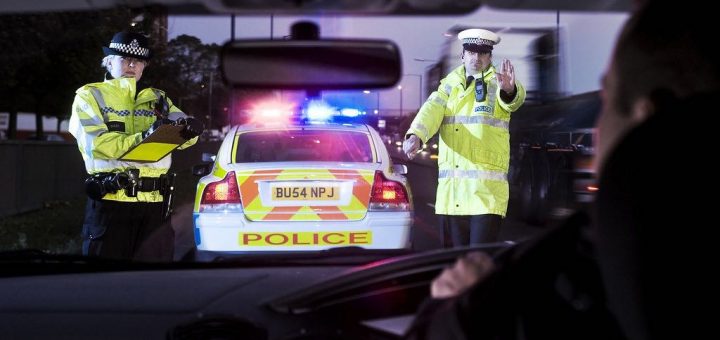
Police and Crime Commissioners, Police Chiefs, the RAC and leading road safety organisations have joined forces to call on the Government to commit to introducing alcohol interlocks for high-risk and repeat drink-driving offenders.
In an open letter to the Prime Minister, the coalition is urging the Government to use its forthcoming response to the motoring offences consultation to set out a clear route towards an alcohol interlock – or ‘alcolock’ – programme in the UK. The intervention comes after the Government passed its own three-month timetable for publishing a summary of responses and next steps following the consultation’s closure.
Alcohol interlocks are breathalysers connected to a vehicle’s ignition. If alcohol is detected above a set threshold, the vehicle will not start. The technology is already used internationally to tackle repeat drink-driving and can be fitted to almost any vehicle.
The Department for Transport estimates that 220 people were killed and more than 1,500 seriously injured in drink-drive collisions in Great Britain in 2024. International evidence suggests alcohol interlocks can reduce reoffending by up to 70%, while RAC polling has found that 82% of UK drivers support their introduction for repeat and high-risk offenders.
The letter argues that every further delay leaves an avoidable gap in the UK’s approach to drink-driving, with courts currently unable to require convicted offenders to use an alcohol interlock when returning to the road.
RAC head of policy Simon Williams said, “Drink-driving remains one of the most preventable causes of death and serious injury on our roads. Alcolocks physically stop someone from driving after drinking, and there is strong public support for repeat or high-risk offenders having to have them fitted to their vehicles before being allowed to drive again.
“The Government said it would set out its next steps within three months of the Road Safety Strategy consultation closing. That deadline has now passed, and every further delay means more preventable harm on our roads.
“As Mayor of Greater Manchester, the Prime Minister backed the ambition of Vision Zero – that nobody should be killed or suffer life-changing injuries on our roads. We are asking him to bring that same ambition to the whole country and commit to a mandatory alcohol interlock programme for high-risk and repeat offenders.”
The signatories are calling for courts to be given the power to require an alcohol interlock as a condition of an offender returning to driving, supported by monitoring and appropriate rehabilitation.
Among the signatories are the RAC, Road Safety Great Britain, Brake, the Parliamentary Advisory Council for Transport Safety, the Road Safety Foundation, the Association of Police and Crime Commissioners, National Police Chiefs’ Council Roads Policing and the Royal Society for the Prevention of Accidents.
 Drink-drive casualties across Dyfed-Powys have risen by half over the past decade, according to new Department for Transport figures.
An estimated 120 people were injured or killed in drink-drive collisions across the police force area during 2024, compared with 80 in 2015.
The latest total comprised 50 people seriously injured or killed, and 70 who suffered slight injuries.
Across Wales as a whole, the Department for Transport estimates that 350 people were injured or killed in drink-drive collisions during 2024.
Published local authority figures indicate approximately 110 casualties across the South Wales Police area, 60 in Gwent and 30 in North Wales.
Separate Home Office figures show Dyfed-Powys Police had approximately 70 officers working in specialist Traffic Units in March 2026, compared with 78 a decade earlier — a reduction of around 10%.
Across all four Welsh forces, the combined number working in specialist Traffic Units fell by approximately 5%, from 318 in March 2016 to 302 in March 2026.
This is a considerably smaller reduction than the 25% fall recorded across the 43 territorial police forces in England and Wales as a whole.
South Wales Police had approximately 106 officers working in specialist Traffic Units, compared with 120 in 2016. Gwent’s figure rose slightly from 57 to 58, while North Wales increased from 64 to 68.
Hunter Abbott, Managing Director of personal breathalyser firm AlcoSense Laboratories, said, “The increase in drink-drive casualties across Dyfed-Powys is particularly concerning.
“An estimated 120 people were killed or injured in a single year, including 50 who lost their lives or suffered serious injuries. Each casualty represents an individual and family whose lives may have been changed forever.”
Abbott said it was encouraging that specialist Traffic Unit numbers had been broadly maintained across Wales compared with the much larger national reduction.
“Wales has avoided the steep fall in specialist Traffic Unit strength seen across England and Wales as a whole,” he said.
“Nevertheless, enforcement remains essential. Drivers must believe there is a realistic chance of being stopped and tested if drink-drive laws are to provide an effective deterrent.
“The figures for Dyfed-Powys show that there is no room for complacency.”
