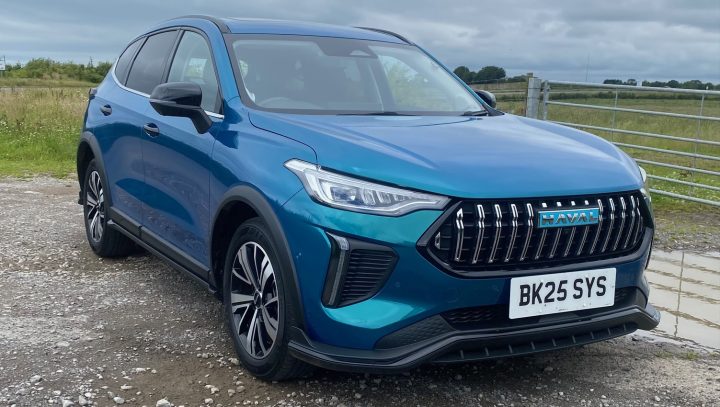
This is a good question for any bar quiz or testing a motoring enthusiast: What roomy family car comes with luxury-car features for about £30,000?
As new car prices go through their own sunroofs, desirable features are left out and some dealers struggle to clear showrooms to fewer customers walking in there is an underlying issue; demand is failing to meet supply.
 Legacy European brands had a hard time since the Covid Pandemic, then along came the drive towards zero emissions and ill-thought-out legislation based on wet finger-in-air targets with many bad decisions taken as a result by politicians and industry bosses.
All the time while Europe huffed and puffed, the Chinese were watching, and waiting to blow down the showrooms’ doors with their advanced models.
Some were pure battery electric models, others highly efficient hybrids but all hit the UK at prices which would significantly undercut the established brands. Ok, many of the Chinese brands and models had seemingly tongue-twisting, almost illogical names, but they translated into sales many familiar European brands might dream about.
The leading Chinese brand now accounts for ten per cent of UK registrations and rising.
Among the early surfers to ride this wave of opportunity was International Motors, which some may remember took over the aftersales care of Mitsubishi models and which now imports their new models as well, and they partnered with Great Wall Motors. They started with the GWM Funky Cat which evolved into the Ora 03 before it was discontinued after four years of low demand and then brought us the Haval SUV and Poer Pickup, which should have a wider appeal filling other sector gaps.
 The Haval Jolion Pro is sold in three trim levels, Premium Lux or Ultra, and they share a common powertrain of a 95ps 1.5 litre petrol engine mated with a 149ps electric motor and 1.69kWh traction battery.
The Haval Jolion was introduced to Australia in 2021 so it has some history and has been carefully priced for UK buyers from under £24,000, before any discounts and grants, to about £30,000 for the three models Premium, Lux and Ultra which use identical powertrains and only vary by trim and equipment.
 Premium versions get 17-inch alloys, digital dials, touchscreen with Apple and Android compatibility, while Lux gives you heated leather-effect seats and our Ultra came with roof rails, big sunroof, wireless charging, heated and ventilated front seats, head-up display, auto and parking sensors, with selectable ambient interior lighting. That’s an impressive package for under 30K before securing any discount or contribution.
It is an attractive package and what’s more it’s a good drive despite being two wheel drive only.
It was brisk in town and agile, responded quickly to accelerate, easy manoeuvring and parking and generally stayed planted on the road through twisting corners.
 The powertrain gave good getaway from rest and a useful electrical boost when accelerating to overtake on main roads while its overall fuel consumption was sometimes approaching 50mpg on a modest throttle and a longer journey and its motorway performance was effortless.
Automatic changes were smooth and quick whether accelerating or slowing down and the engine had plenty of flexibility although it could be noisy at high revs.
 We found the steering was easy and turning circle quite good in town when parking without being too light or vague on main roads.
Brakes were strong and with modest pressure effected a quick stop and a lot of feedback all the way. The parking brake held the near 1.6 tonnes car on our usual test slope.
This model had a good head-up display as well and this is a rare feature at the price.
Secondary controls on the column and wheelspokes worked well but lacked clarity and needed familiarisation to do what you intended every time.
 For all its good features however, the infotainment display was not only disappointing but very old fashioned in its design, operation and visibility. Odd English words popped up and the whole thing was small to read in poor light, particularly the menu.
For driver and passengers the seats were very comfortable, cooling or heating as required – another unexpected feature at the price – and the climate controls were easy and effective throughout the cabin.
 An suv is a family car first and foremost so needs the reasonably good oddments space given in the Jolion while the loadbed easily filled and cleared with the capacity tripling as the rear seats folded down.
It struck us how big were the door openings and the near-90-deg approach angle, with fair legroom throughout as well as good headroom for taller users. If you have long legs, the under thigh support was not generous by contrast.
 Low waistlines, plenty of uninterrupted glass with good wipers and wash aided parking and at night the headlights shone a long way ahead but their beams were not wide spread if driving in the countryside.
If you pressed on the engine noise became more intrusive alongside the ever present suspension and tyre noise.
 Ride was biased towards firmness but it was not hard and the seats did a good job of comforting occupants. It felt safe and surefooted as a family car.
The GWM Havel Jolion may be a driver’s first acquaintance with a Chinese model and while it may at first seems strange and unfamiliar the fact is that it makes an overall favourable impression and stands as a real challenger to the more familiar legacy brands now struggling to keep up.

