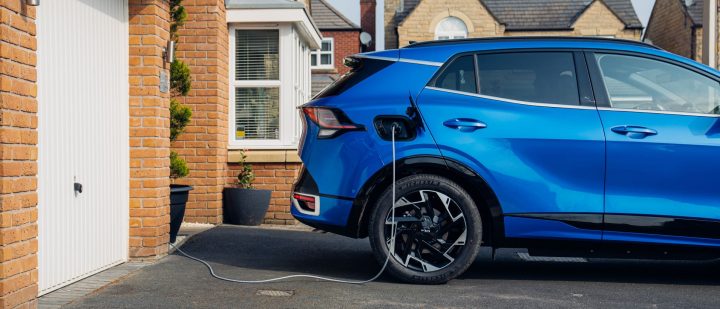
UK vehicle dealerships are experiencing an acceleration in electric vehicle demand with customer enquiries, vehicle purchases, and finance applications gathering pace over the past 12 months.
New dealer research from Close Brothers Motor Finance (CBMF) reveals that more than eight in 10 dealerships stocking electric vehicles have experienced an increase in customer interest across every stage of the buying journey.
Nearly nine in 10 dealers (86%) report an uptick in EV customer enquiries, while 84% confirm an increase in actual EV purchases over the past year.
Additionally, 86% of dealers reported increased interest in EV finance, while almost nine in 10 (89%) have seen greater demand for home charging solutions.
When securing an electric vehicle, traditional finance structures remain the dominant choice for buyers. Conditional Sale and Hire Purchase (HP) are currently the most popular finance products, each selected by 30% of dealerships. Personal Contract Purchase (PCP) follows closely behind at 27%.
Despite strong market momentum, the findings highlight several pain points that are slowing adoption. The primary concerns raised by prospective buyers focus on charging infrastructure and future vehicle values, with both cited by 34% of dealerships as key roadblocks. Battery lifespan and insurance costs follow closely behind, each identified by 31% of dealers.
However, previous research by Close Brothers suggests infrastructure anxiety may be more psychological than practical. Over four in ten motorists (42%) drive 100 miles or fewer in a regular week. This statistic illustrates that for many, routine driving habits fall well within the typical 300-mile range of modern EV batteries, making frequent public charging largely unnecessary.
Affordability and vehicle range also remain hurdles. Almost three in 10 dealers state that the upfront cost of purchasing an EV (30%) and range anxiety (30%) continue to deter potential buyers, while more than a quarter note that many consumers still prefer traditional petrol or diesel vehicles.
John Cassidy, Managing Director at Close Brothers Motor Finance, commented, “EV demand remains high, and on the rise in the UK, with our latest research highlighting that consumers are showing interest at every stage of the buying process. This news will be met with encouragement by dealers and the government alike, and demonstrates that the broader net zero transition is being embraced by the public.”
Hybrid vehicles are the most likely cars on UK roads to pass their MOT first time, according to new analysis of DVSA testing data by specialist motor trade insurance broker ChoiceQuote.
The study found that 91% of hybrid vehicles successfully passed their MOT at the first attempt, making them the strongest-performing fuel type in the UK. Battery electric vehicles followed closely behind at 89%.
Chris Galloway, Head of Trading at ChoiceQuote, said, “Our analysis shows modern electrified technology is setting the pace for vehicle health across the UK.
“Hybrids and EVs are passing at higher rates, which could be due to simpler mechanical setups and cleaner operating systems compared to aging petrol and diesel engines. For motorists and trade professionals managing fleet risk, keeping on top of basic checks remains the single biggest factor in keeping vehicles roadworthy.”
According to DVSA inspection data, nearly half of all MOT failures are down to minor, preventable issues that drivers can easily spot.
Five quick pre-MOT checks to avoid a potential fail
- Lighting and signalling: Lighting issues account for a quarter of MOT failures, making this the most common cause for test failures. Walk around the car to test headlights, indicators, and reverse lights, and reverse towards a wall or garage door to check brake lights and number plate illumination.
- The 20p tyre check: The UK legal minimum tread depth is 1.6mm across the central three-quarters of the tyre. Insert a 20p coin into the main grooves: if the outer band of the coin remains visible, the tread is illegal and will result in an immediate fail. Also inspect sidewalls for bulges, cuts, or uneven wear.
- Clear view of the road: Wiper blades that smear, judder, or split will fail the test. Additionally, check the windscreen for chips: damage larger than 10mm directly in front of the driver’s view, or larger than 40mm across the rest of the swept area, is a major defect.
- Top up the screen wash: MOT testers must be able to verify that the windscreen washers operate correctly and clear the windscreen effectively. Ensure the washer reservoir is topped up before the test, as an empty bottle may result in a failure [4].
- Emissions and warning lights: Ensure all dashboard warning lights illuminate with the ignition and turn off once the engine runs. For petrol and diesel cars, taking the vehicle on a 20-minute drive prior to the test can help to raise the engine and catalytic converter to full operating temperature, which may support compliance with emissions requirements.
One of the oldest rules of buying a used car could be becoming obsolete in the electric age, after analysis of 47.4 million MOT tests found high-mileage electric cars are significantly less likely to fail than petrol equivalents.
The study, commissioned by the British Vehicle Rental and Leasing Association and carried out by independent transport research organisation New AutoMotive, analysed official DVSA MOT records to examine what happens to electric cars as they age and accumulate mileage.
It found relatively little difference between electric and petrol cars at lower mileages once both vehicle age and mileage are taken into account. Between 20,000 and 40,000 miles, 12.0% of battery electric vehicles failed their MOT compared with 11.7% of petrol cars.
But from around 60,000 miles the pattern changes markedly. Rather than continuing to deteriorate as mileage increases, the MOT failure rate for electric cars levels off at approximately 16%, while petrol and diesel failure rates continue climbing.
Among cars aged three to eight with between 90,000 and 120,000 miles on the clock, 16.5% of EVs failed their MOT compared with 22.1% of petrol cars, making the electric cars around 25% less likely to fail. Above 120,000 miles, the gap grows further, with a 16.0% failure rate for EVs compared with 23.5% for petrol.
The findings challenge the traditional used-car assumption that high mileage is inevitably accompanied by rapidly increasing mechanical risk.
Toby Poston, Chief Executive of the BVRLA, said, “Mileage has always been one of the first things people look at when buying a used car, and passing 60,000 or 70,000 miles can have a big impact on how a vehicle is perceived. This research suggests we need to think differently when it comes to electric vehicles.
“Many of the EVs now entering the used market have had their first life in company and leasing fleets and have already covered substantial mileage. What this data shows is that mileage alone should not put consumers off. A well-maintained, higher-mileage electric car can be an extremely durable used vehicle.
“That matters because the used market is where the transition to electric becomes accessible to millions more motorists. Giving buyers confidence in these cars will be critical to creating a healthy and affordable second-hand EV market.”
Older EVs are still being driven
The researchers also examined whether older electric cars appeared to be disappearing from Britain’s roads earlier than petrol vehicles.
Tracking whether vehicles returned for a subsequent MOT within 30 months found that at age 15, 94.6% of electric cars returned compared with 88.1% of petrol cars.
That equates to an implied road-exit rate of 5.4% for electric cars compared with 11.9% for petrol. Road exit can include vehicles being scrapped, exported or declared SORN, so the study does not claim that all vehicles which disappear from the MOT dataset have been scrapped.
Nor does the longevity appear to be explained by old EVs becoming low-mileage second cars. Electric vehicles recorded higher median annual mileage than petrol cars at every age examined between four and 16 years. At age 12, for example, electric cars covered a median of approximately 4,920 miles a year compared with 4,410 miles for petrol cars.
Ben Nelmes, Chief Executive of New AutoMotive, which carried out the research, “The important thing about this study is that we can separate age from mileage.
“Looking simply at the headline MOT numbers gives a misleading picture because Britain’s electric cars are much younger than its petrol and diesel fleet, while comparing cars by age alone misses the fact that EVs have typically covered considerably more miles.
“Once we compare cars of the same age and mileage, something striking happens. At lower mileages there is very little between petrol and electric cars, but beyond around 60,000 miles the failure rate for EVs flattens while the petrol failure rate continues to rise.
“That is powerful evidence for anyone considering a used EV. High mileage isn’t a proxy for poor condition in the way buyers have traditionally assumed. The data suggests the mechanical simplicity of an electric drivetrain starts to become increasingly valuable as cars accumulate miles.”
EVs are not better at everything
The study also identified areas where electric cars performed worse, particularly tyres.
Across the dataset, EVs recorded approximately 1.8 times as many tyre defects as petrol cars, although the analysis found that the problem was particularly pronounced among some earlier EVs adapted from combustion-engine platforms.
Researchers found no equivalent ‘EV weight penalty’ for suspension components. Between 60,000 and 90,000 miles, electric cars recorded 4.7 suspension defects per 100 tests compared with 6.1 for petrol cars.
Regenerative braking also produces a more complicated picture. High-mileage EVs experienced substantially fewer brake defects, but older, low-mileage electric cars showed increased friction-brake defects, which the researchers attribute to corrosion associated with the physical brakes being used less frequently.
Hybrid cars also performed strongly in the analysis and in several categories recorded lower MOT failure rates than either petrol cars or BEVs. The researchers stress that the study is therefore not intended to establish one powertrain as universally more reliable than another, but to test concerns about whether battery-electric vehicles become less roadworthy as they age and accumulate mileage.
Battery health remains the missing piece
The research does not measure the health or remaining capacity of an electric car’s battery.
MOT tests examine statutory roadworthiness, including brakes, tyres, suspension, steering and lights, but do not measure battery state of health, electro-chemical degradation or charging performance. The researchers say battery-health information should therefore be considered alongside mechanical roadworthiness when assessing an individual used EV.
Poston added, “This isn’t an argument for buying a used EV without doing your homework. Buyers should look at its history, condition, tyres and battery health just as they would scrutinise the engine, gearbox and service history of a petrol or diesel car.
“What we can now challenge is the idea that an electric car with 80,000 or 100,000 miles on the clock should automatically be regarded as worn out. The evidence simply doesn’t support that assumption.”
