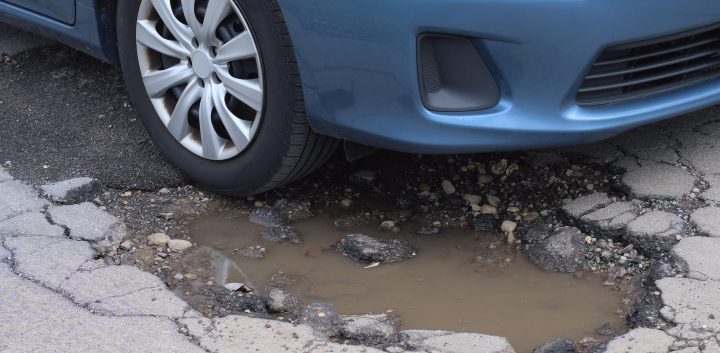
The RAC fears near constant rain so far this year has led to a sudden spike in drivers being caught out by potholes hidden in puddles.
Reports to the RAC from broken-down drivers about potholes in February averaged 225-a-day, nearly three-and-a-half times the 66-a-day seen in the same month last year and more than five times the 43-a-day recorded throughout all of 2025.
In all of February, 6,290 RAC members mentioned potholes to the RAC when logging their breakdowns via the myRAC app or on the phone, compared to just 1,842 in the same month in 2025. Reports of potholes peaked at 336 drivers on Friday 6 February – more than 2.5 times as many as the highest number seen last year (141 on 19 December).
January saw 5,106 mentions – an average of 165-a-day compared to just 63 in January 2025 – making for a total of 11,396 so far in 2026, an average of 193-a-day.
In 2025 the RAC’s expert patrols went out to a total of 26,048 members who had suffered damaged shock absorbers, broken suspension springs or distorted wheels – the breakdowns most likely to be caused by the wear and tear from poor road surfaces.
While this figure excludes punctures – as they are most commonly caused by sharp objects – the RAC has attended 20% more punctures compared to the same period last year, implying potholes are taking their toll on tyres too.
RAC head of policy Simon Williams said, “Met Office data shows there were nearly 19 days of rain in February making it one of the worst Februarys in 126 years**. This led to an incredible amount of standing water and puddles on our roads, many of which were hiding potholes which sadly too many drivers fell foul of.
“While this amount of rain is hard for the saturated land to cope with, the RAC suspects that poor drainage may also be to blame, possibly as a result of councils not carrying out as much of these works as they have done in the past.
“Water is the enemy of the roads as it gets in through defects, undermining the integrity of the surface from underneath. And when the temperature drops below zero it freezes and expands, creating potholes. Preventing water from sitting on our local roads is key to their long-term health, so it’s vital more work to improve drainage is carried out.”
He added,“Without this, drivers will continue to have to fork out their hard-earned money on fixing their cars. New tyres are expensive enough these days, but anything more serious than a puncture is likely to cost up to £590 according to our garage data. Drivers pay their fair share of tax, so it’s plain wrong they’re having to find even more money to get their cars repaired.
“We urge the Government to hold councils to account on drainage works, just as they’ve done with preventative road maintenance which stops the formation of potholes.
“The mantra for better local roads is straightforward: improve drainage so water doesn’t sit on roads, fix potholes permanently, seal roads with preventative treatments like surface dressing and microsurfacing to stop water getting in and causing damage, and resurface roads that have gone beyond the point of reasonable repair.”
Road Surface Treatments Association chief executive Mike Hansford said: “Core road maintenance principles include the necessity to remove water from the highway, as well as sealing roads early in their life, to prevent water ingress.
“Weather conditions have been very challenging so far this year, but water pooling on the road not only poses an immediate risk to road users, it accelerates road deterioration, and leads to the formation of potholes which can be hidden under water.
“A multi-agency approach including local authority departments and the Environment Agency, combined with the cooperation of adjacent landowners, is essential to address the problem of surface water on the highway and therefore to reduce the risk of potholes.”
For drivers who have suffered pothole-related breakdowns, the RAC’s nationwide team of mobile servicing and repairs technicians can save the need to get booked into a garage by replacing suspension springs, shock absorbers, other suspension parts such as control arms and bushings, and steering components at drivers’ homes or workplaces instead.
