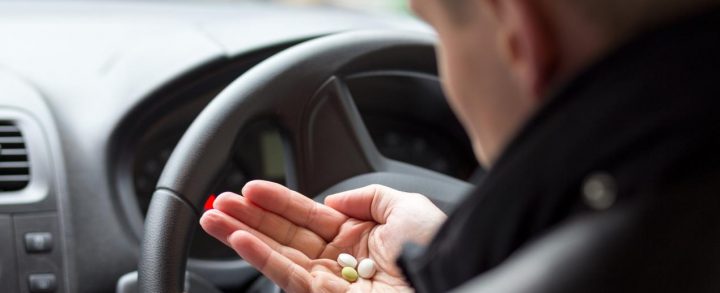
Drug-drive reoffending have surged by more than 134 percent in the last four years revealing a system that is broken and in need of urgent reform, according to victims and road safety campaigners.
A Freedom of Information (FOI) request submitted to the Ministry of Justice by road safety charity IAM RoadSmart shows that drug-drive re-offending rates are surging: in 2024 there were 3,193 instances of drug-driving reoffending – more than 134 percent higher than the 1,363 recorded offences in 2020.
Nearly half of drug-drive offences (44%) are committed by a reoffender, according to Government data. One person committed the offence when they had 18 previous drink and drug-driving convictions.
When police suspect a person of drug-driving, they will conduct a roadside screening test such as a swab which can test on the spot for cannabis and cocaine.
They may also perform a Field Impairment Test (FIT) and ask the driver to perform physical tasks to assess coordination such as walking in a line or standing on one leg. A person will be arrested if they fail the roadside test, FIT, or if the officer still suspects driving is impaired by drugs. The offender will then be taken to a police station and asked to provide a sample of blood or urine for laboratory analysis.
One of the reasons that reoffending is rife could be because of delays of up to six months to process blood tests, which means people who have failed a roadside test are allowed to continue to drive.
Some of those drivers have gone on to kill while their results are pending.
Jane Hickson was killed by Paul Wright who was on bail for drug-driving at that time, having been arrested six months earlier after testing positive at the roadside.
Tim Burgess was killed by Joshua Eldred who had also been bailed pending a blood test, meaning he was free to drive. Both tests would later prove to be positive.
The backlog has been acknowledged in the Government’s new road safety strategy, which proposes giving police powers to suspend the driving licences of those suspected of committing a drug-driving offence.
Exploring alternative methods for drug-driving evidence collection and sampling is also on the table. Australia has been using immediate, roadside evidential saliva sampling for nearly two decades, combining this with laboratory testing for rapid case resolution.
Research conducted by IAM RoadSmart in August 2025, through a survey of 2,053 UK motorists, found that 82 percent support a proposal to give police powers to suspend driving licences immediately pending trial for those testing positive for drug-driving.
Separate figures show that drug-driving on the whole is increasing: 20,072 people in England and Wales were sentenced for drug-driving offences in 2024 – 143 percent higher than in 2017.
A conviction for drug-driving carries a minimum one-year driving ban, an unlimited fine, and up to six months in prison.
While the drink-drive rehabilitation scheme has in place for 25 years[vii], no such national scheme exists for drug-drive offenders although trials are being been undertaken.
A drink-drive course is offered to drivers who have been disqualified for 12 months or more. It can reduce the length of the ban by as much as a quarter.
Studies show that offenders who did not attend a drink-drive rehabilitation course were up to two and a half times more likely to reoffend compared to those that did attend the rehabilitation course
